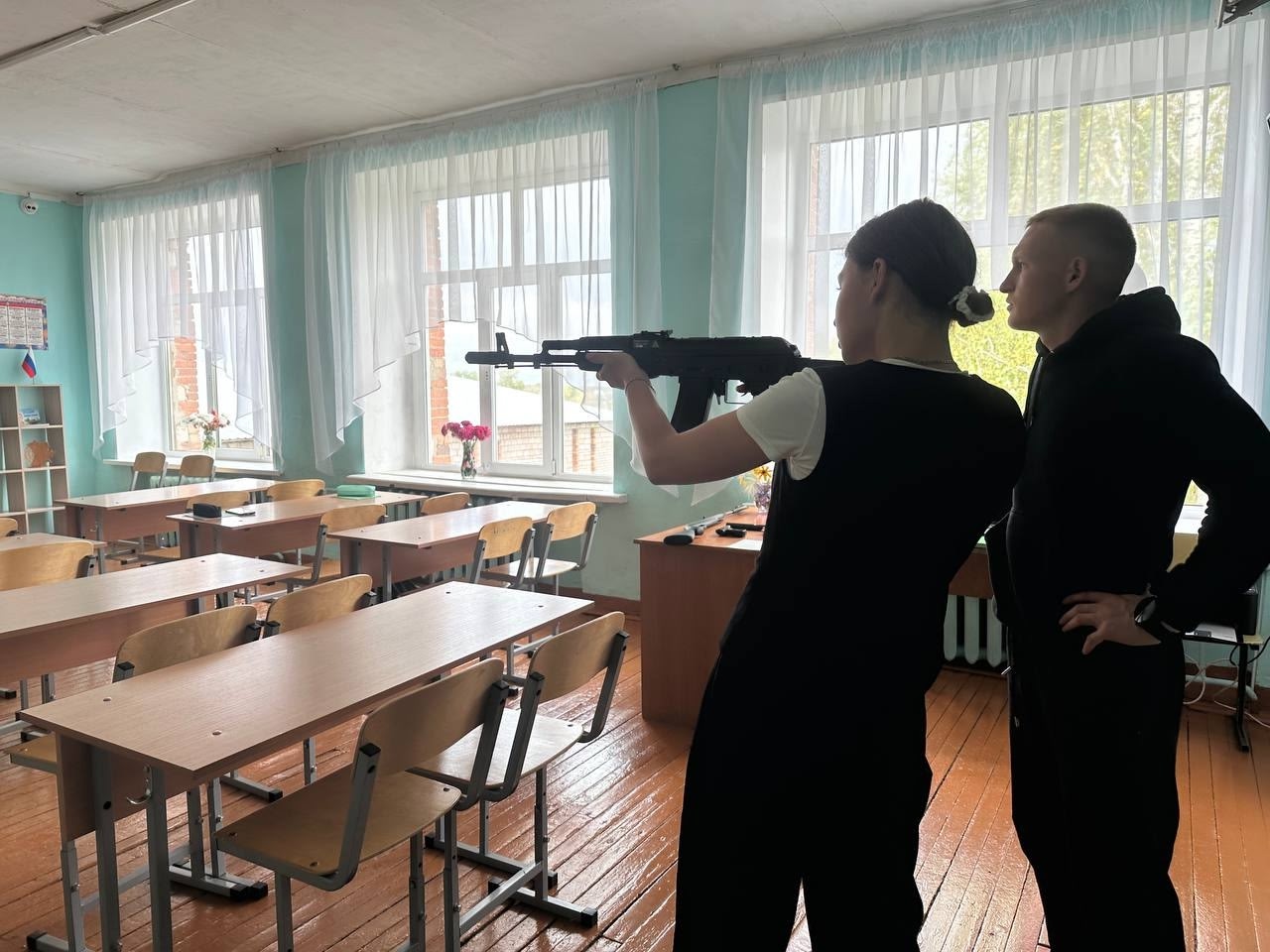
Following Russia’s full-scale invasion of Ukraine, a new subject replaced the familiar Life Safety Fundamentals (OBZh) in Russian schools — “Fundamentals of Security and Defense of the Motherland” (OBZR). Along with the new name came basic military training, while school classrooms were supplied with replica rifles and grenades, shooting equipment, and equipment for assembling drones.
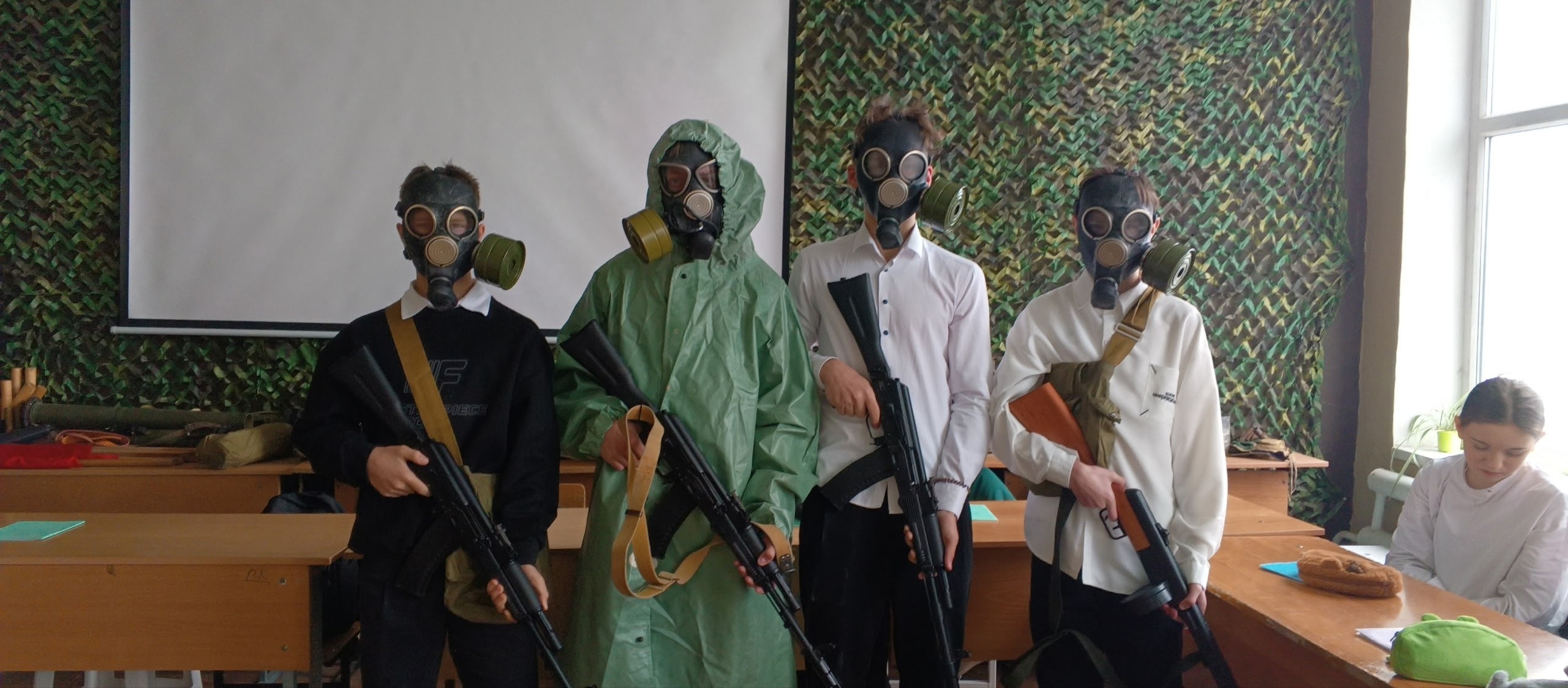
The NeNorma project, together with Verstka, analyzed millions of posts published by Russian schools to find out how the introduction of the new subject intensified propaganda.
Before the war, words such as “patriot,” “heroism,” “duty,” “self-sacrifice,” “army,” and “military training camps” appeared in roughly one in eight posts about OBZh. After the introduction of OBZR, they were mentioned almost twice as often — in roughly one in four posts.
The use of the word “patriot” increased particularly sharply — appearing in almost 40,000 posts over five academic years. In the 2021–2022 academic year, it appeared in 9% of posts about OBZh; by 2025–2026, it was already present in 19% of posts about OBZR.
“The state is setting new tasks for schools. One of these tasks is to raise not only patriots, but future soldiers as well. And the skills students acquire while studying OBZR will also be useful in everyday life,” — Gornyak Secondary School, Udmurt Republic.
In just a few years, a subject that was once focused on everyday safety has thus turned into yet another systemic tool for the militarization of Russian schoolchildren — one in which children are taught that they need to prepare for military service, “fulfill their duty to the Motherland,” and be ready for self-sacrifice.
Read the joint investigation by NeNorma and Verstka on how the war has transformed one of Russia’s school subjects: https://verstka.media/kak-s-poyavleniem-urokov-obzr-usililas-voennaya-propaganda-v-shkolah
Cover: Dmitry Osinnikov, Verstka