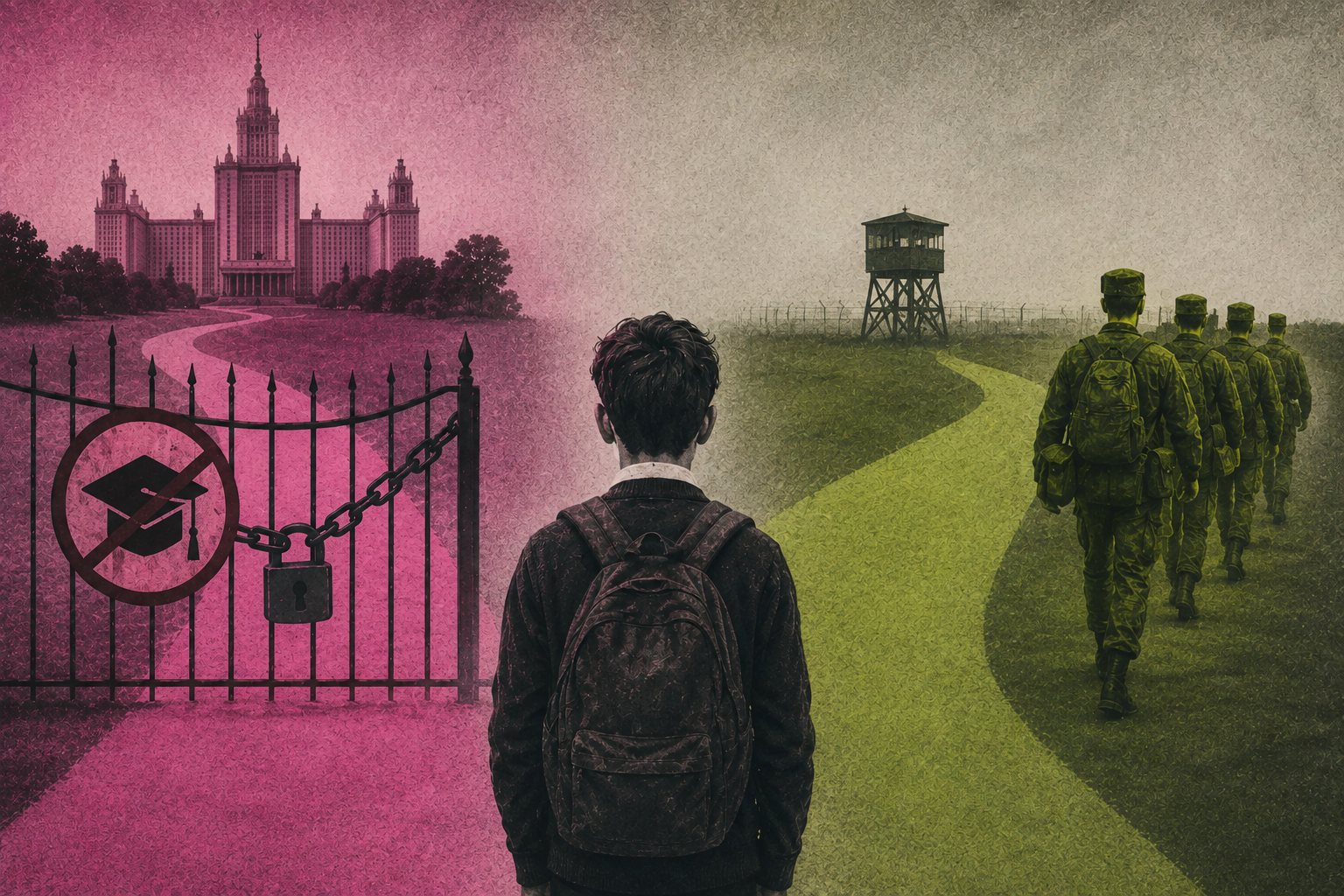
For many Russian families, moving from ninth to tenth grade has turned into a real challenge. The state is pushing teenagers toward vocational training and blue-collar professions, while getting into university is becoming increasingly difficult — and young men graduating from vocational colleges face the prospect of military conscription.
The BBC Russian Service spoke with parents, students, and teachers, who said that children are choosing vocational colleges not because they genuinely want to. Getting into university has become more difficult: the number of tuition-based places is being reduced while fees are rising, and 10% of state-funded places allocated under special quotas go to veterans of the war against Ukraine and their children.
“The authorities don’t need people studying for a long time. They need them to start working, while cutting the budget as much as possible. In the current situation, spending on education or any kind of social support simply isn’t a priority,” — one teacher said.
❗️Especially for the BBC Russian Service, the Ne Norma project found that since the 2023–2024 academic year, vocational colleges have been mentioned in Russian schools’ VK posts more often than universities. In the incomplete 2025–2026 academic year alone, the gap exceeded 66,000 posts.
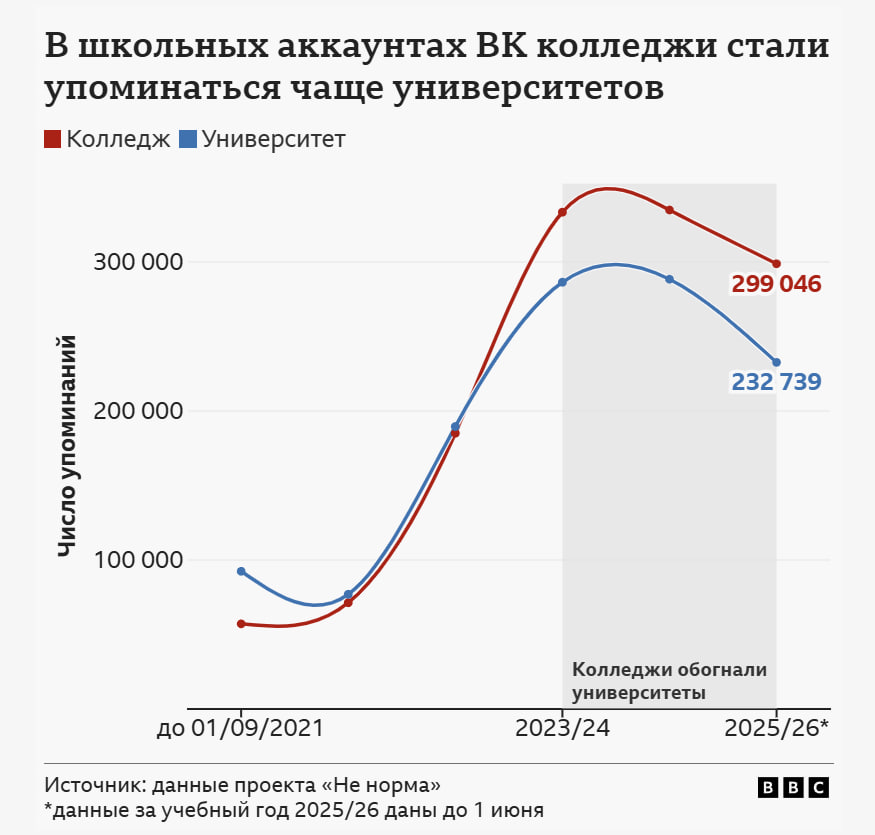
We paid particular attention to posts encouraging students to apply — those mentioning open days, campus visits, or meetings with representatives of educational institutions. If more than 6,000 identical posts advertising Sirius University are excluded, 2026 became the first year in which schools published more posts encouraging students to apply to vocational colleges than to universities.
👉 Read the full article at the link: https://www.bbc.com/russian/articles/ckgd1rxp7gno